Where to Research Pattern Trends in the UK: Markets, Museums and Mills
Pattern ideas rarely arrive from a screen. They turn up in a drawer of wallpaper samples in an archive, on a folding table of block-printed cotton off Brick Lane, at the bottom of a bin of selvedge in a Yorkshire mill shop. Britain is unusually well supplied with this kind of raw material: public collections, working mills, weekly markets and small print studios, most of them free or cheap to visit. What follows is a practical map of where to look, what to ask for, and how to leave with something you can actually draw from.
Start with archives, not mood boards
A pattern is a construction as much as an image: a motif, a repeat, a grid, a colour sequence. Archives are one of the few places where you can examine all four at once, because they hold the working documents — pattern books, sample cards, technical drawings, order ledgers — rather than the finished cushion. That is the difference between copying a look and understanding how it was built.
Plan the visit like a research trip. Search the online catalogue beforehand and note reference numbers; most collections have digitised only a fraction of their holdings, so the item you spotted online may not be the one you want in the flesh. Book a study room slot in advance, take a pencil rather than a pen, and expect to leave bags in a locker. Staff are generous with time when you arrive with specific questions: what is the repeat size, what is the substrate, how many screens were used?
Museum collections that repay a train ticket
The Victoria and Albert Museum in London is the obvious starting point and still the best one. Its textile galleries give you several centuries of printing in a single walk, while the study rooms and the National Art Library allow you to request individual pieces and books. You need a reader's ticket for the library, and study rooms are not open every day, so check before you travel.
Worth the journey
- Warner Textile Archive, Braintree — pattern books, designs and samples from a British silk and furnishing weaver, consulted by appointment.
- Sunny Bank Mills, Farsley — a former worsted mill in Leeds with an archive, a gallery and working studios on site.
- Macclesfield Silk Museum — silk weaving and printing in Cheshire, with machinery and pattern records.
- Armley Mills, Leeds — industrial museum with looms, textile machinery and changing displays.
- Queen Street Mill, Burnley, and Helmshore Mills, Rossendale — Lancashire cotton and woollen heritage, including the machinery that produced the cloth.
- Coldharbour Mill, Devon — a working heritage mill that still runs machinery and sells yarn and cloth.
- New Lanark, Scotland — a World Heritage Site with spinning machinery, an Annie McLeod exhibition and village history.
- Fashion and Textile Museum, London, and the Whitworth, Manchester — both programme textile exhibitions that are worth timing a trip around.
Smaller regional museums often hold the most surprising material: sample books from local printers, dress fabrics donated by families, and trade catalogues nobody has catalogued properly. Ring ahead and ask what is in store. Curators will often pull things out for a serious enquiry.
Mills, mill shops and the making side
Mill shops sell you the end product; the mill itself tells you how it is made. In West Yorkshire, look for worsted spinners and weavers with factory shops selling selvedge, yarn cones and end-of-line lengths. In the Scottish Borders, Hawick still has knitwear and cashmere mills whose shops sell samples and colour cards. On Harris and Lewis, you can visit weavers' sheds and see tweed woven on a single-width loom in a shed at the end of a garden path.
Ask for what is usually thrown away: sample books, colour cards, faulty print lengths, yarn shade cards. Designers underestimate how useful a shade card is. Twenty tones of the same colour, printed or dyed side by side, is a palette exercise you cannot buy in a shop.
Market stalls: the quickest feedback loop
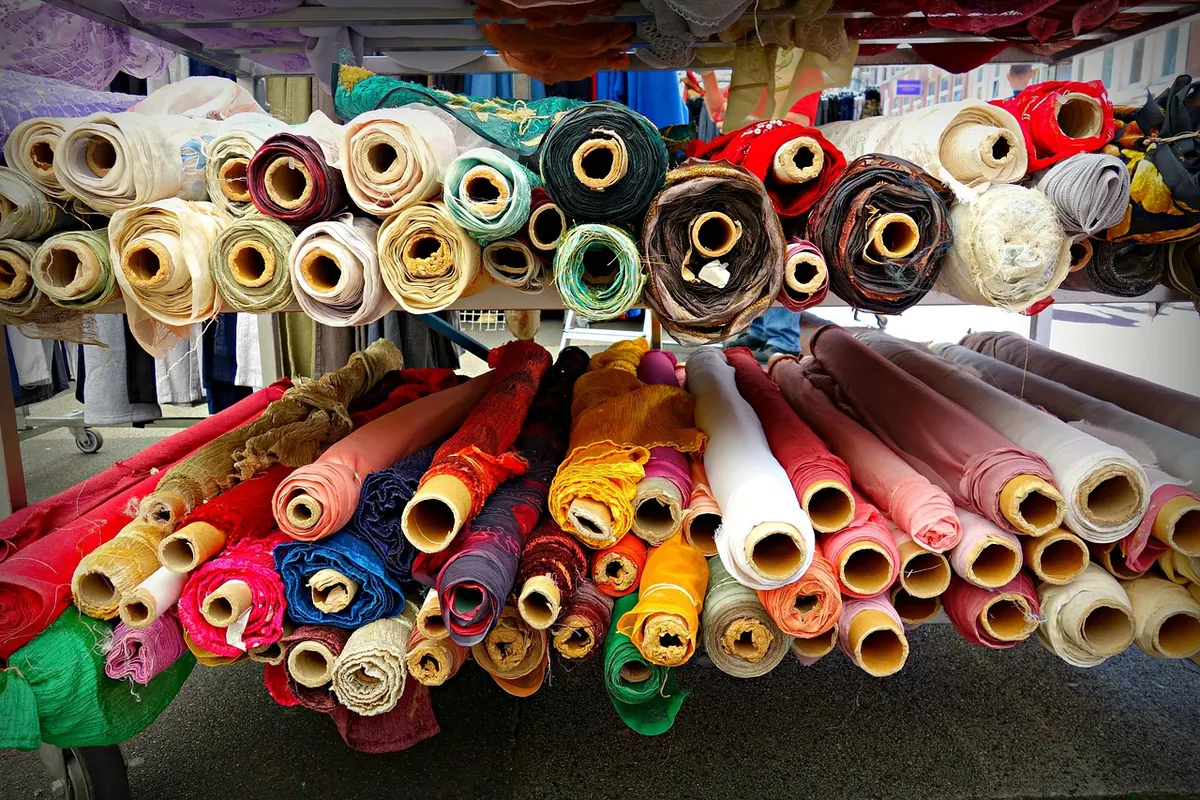
Markets give you volume, cheaply. Portobello Road, Spitalfields, Brick Lane and Camden cover London, but the regional markets are often better value: Bury, Grainger in Newcastle, Leeds Kirkgate, Norwich, and Birmingham's rag market among them. Go early, take cash, and head for the boxes underneath the table where the unpicked garments, torn scarves and odd lengths live.
Three habits make a market trip useful. Ask where the stock came from — the answer often tells you the technique. Buy the damaged thing if the repeat is good, since you are buying information, not cloth. And photograph the whole stall before you buy, so you record how colour was merchandised alongside shape.
Fairs, open studios and print rooms
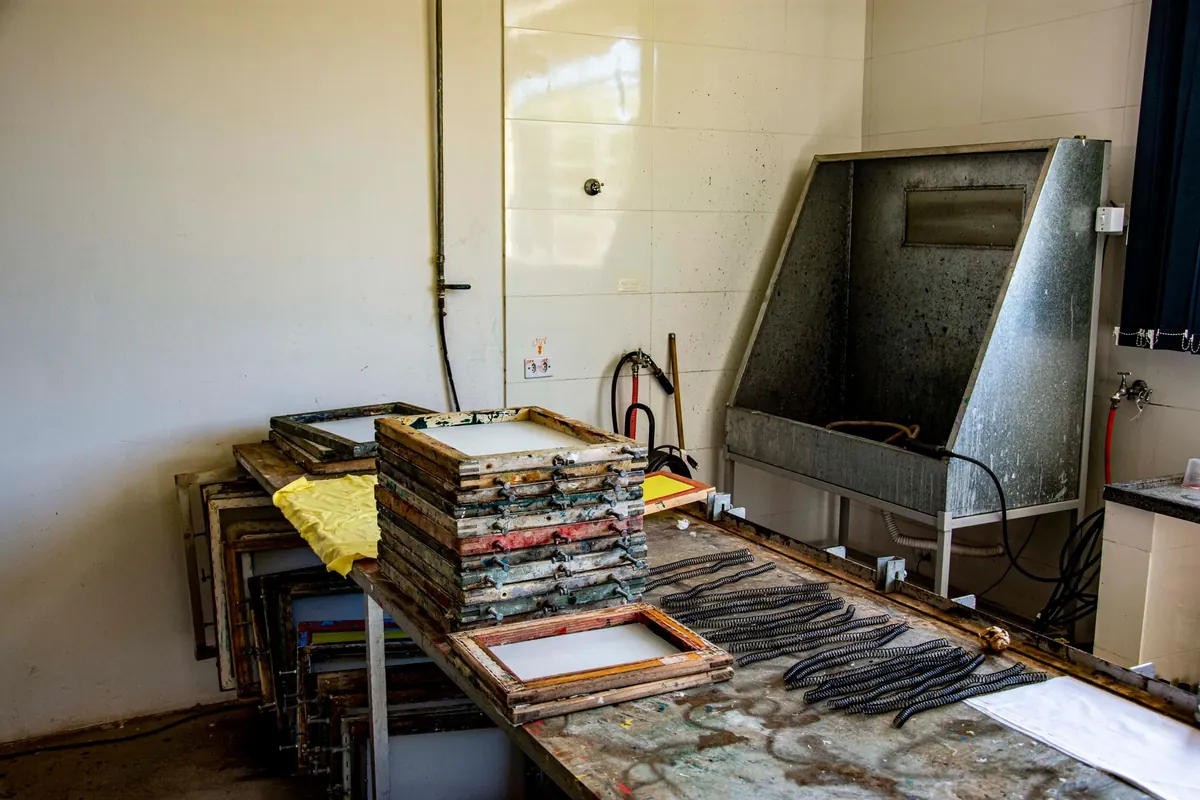
Graduate shows such as New Designers, the Great Northern Contemporary Craft Fair, Cockpit Arts open studios and specialist textile fairs let you talk to printers directly. That conversation is where the technical detail lives: registration, repeat, discharge printing, screen count, how a design was separated for rotary printing. Local guilds of weavers, spinners and dyers, plus community print studios, run open days and short courses where you can test an idea at the bench rather than on a screen.
How to record what you find
- Note the museum, collection reference and date before you note anything else.
- Sketch the repeat structure — half-drop, brick, mirror, stripe — separately from the motif.
- Photograph flat, straight on, with something for scale. Avoid flash in galleries, and never photograph items in special exhibitions unless signs permit it.
- Write the colours down in words as well as samples; your memory of a green will be wrong by evening.
- Add one line on why the piece caught your eye. That line is your brief later.
Draw the repeat, not the picture.
Plan three trips and keep a working file
One archive visit, one market morning, one mill shop. That is enough to fill a sketchbook with structure, colour and material, and it costs less than most short courses. Start local: a county museum, a Saturday market and the nearest mill outlet will teach you more about British pattern than another afternoon of scrolling.
Before you publish or sell anything derived from an archive piece, check the rules. Institutions vary on photography and reproduction, older designs are not automatically free of rights, and the museum may hold its own rights in the images it supplies. Ask the collection directly, in writing, and keep the reply on file. It is a short email that saves a long argument later.
Photo: MabelAmber / Pixabay

You Might Also Like
A practical guide to re-engineering one repeat so it works at stationery and furnishing scale. Keep the rhythm, redraw the detail.
How digital and screen printing compare for a first fabric run — setup costs, minimums, colour limits and hand feel, plus the questions to ask before you commit.